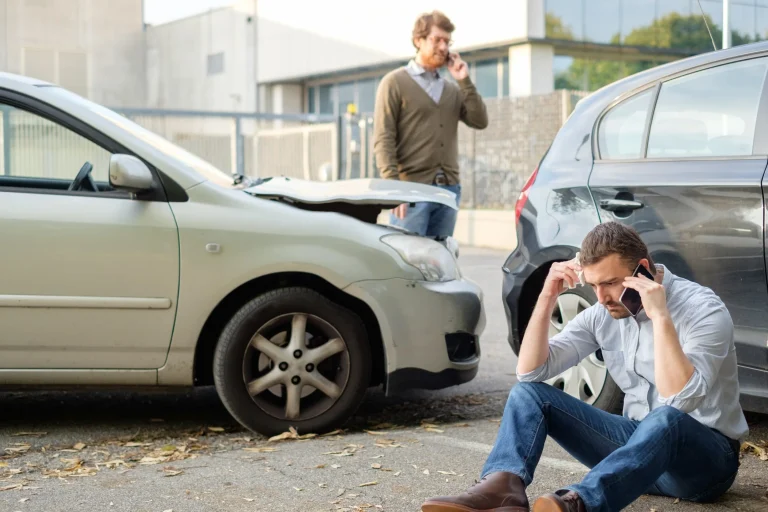

Roughly one Florida driver in five carries no bodily injury coverage, and Florida is one of the few states that does not require it. So the question we hear most often after a serious crash is some version of “the other driver had nothing; is my case over?” Usually it is not. The money comes from places most people never think to look, and the order in which you look matters.
PIP first, whatever the other driver carried
Every registered Florida car carries $10,000 of personal injury protection, and it pays no matter who was at fault or whether the other driver had insurance. PIP pays 80 percent of medical bills and 60 percent of lost wages up to that limit, provided you were seen by a medical provider within 14 days of the crash, and only $2,500 of it is available unless a physician documents an emergency medical condition. It is the floor of a Florida injury claim, not the recovery; a single emergency room visit can use most of it. The firm’s personal injury protection page explains the rules in detail.
Uninsured motorist coverage, the line that decides these cases
Uninsured motorist coverage, UM for short, is a part of your own auto policy under which your insurer stands in for the driver who had no coverage. It pays what the at-fault driver’s insurance would have paid: medical expenses beyond PIP, lost wages, and, where the injury is permanent, pain and suffering. Underinsured motorist coverage is the same coverage applied to a driver whose policy was too small for the harm; in Florida it pays the amount above the at-fault driver’s limits.
Florida law requires insurers to offer UM at the same limits as your bodily injury coverage, and you have it unless you rejected it or chose lower limits in writing (Florida Statutes § 627.727). It comes in two forms. Stacked UM multiplies the limit by the number of cars on the policy, so $100,000 of stacked coverage on a three-car policy is $300,000. Non-stacked UM is cheaper and pays its limit once. People reject UM or choose non-stacked coverage to save a few dollars a month and discover the difference at the worst possible moment. Find your declarations page today and look for the UM line; if it says rejected, call your agent before you need it.
Policies you did not know applied
UM coverage follows the person, not the car. It covers you when you are hurt as a pedestrian, a cyclist, a passenger in someone else’s car, or on a scooter, and it extends to relatives who live in your household. That is how a $1,250,000 recovery on our case results page was paid: a passenger on an electric scooter was hit by a driver who fled and had no insurance, and the recovery came through a family member’s uninsured motorist policy that the family did not know applied. We read every policy in the household before we value a case, because the largest source of recovery in an uninsured-driver crash is usually one the client has never seen.
The people behind the driver
The driver is not always the only responsible party. Under Florida’s dangerous instrumentality doctrine, the owner of a vehicle is responsible for the negligence of a driver they allowed to use it, and the owner may be insured even when the driver was not. If the driver was working, the employer’s commercial policy applies, and commercial limits are many times a personal policy’s. A rental company’s coverage can apply. Florida’s dram shop law is narrow, but a bar or restaurant that served a minor or a person it knew to be habitually addicted to alcohol can be liable for the crash that followed. And an umbrella policy, which many people carry without thinking of it as auto coverage, sits on top of everything else; a $975,000 recovery on our results page came from a driver whose auto policy alone would never have reached that figure, because a $5 million umbrella policy sat behind it.
Hit-and-run drivers
A driver who leaves the scene and is never identified is treated as uninsured for UM purposes, so the claim does not end when the driver disappears. What decides it is the first 72 hours: the 911 audio, the crash report, the body-camera video, and the cameras on the businesses along the road, which are overwritten within days. We send preservation letters the week a client calls, because the footage that identifies the driver, or proves that a vehicle was there at all, exists for days, not months. See hit-and-run accidents.
What not to do
- Do not take the driver’s word for it. People say “I don’t have insurance” at crash scenes for many reasons. The crash report and FLHSMV’s records say what is actually in force.
- Do not treat your own insurer as your advocate on a UM claim. On that claim it stands in the at-fault driver’s shoes, and it evaluates your injuries the way any defense adjuster would. Since 2023, the demand has to give it everything it needs to pay within 90 days; a complete demand is what makes a refusal a documented choice.
- Do not sign anything from any insurer before the policies have been found. A quick settlement with one carrier can release claims against others you have not identified yet.
- Do not wait. Florida gives you two years to file, and the evidence that proves a hit-and-run or an employer’s involvement is gone long before that.
Talk to a Florida car accident lawyer
If you were hurt by a driver with no insurance or too little, call or text 727-847-4878 or contact us online for a free consultation, 24 hours a day. We find every policy that applies before we tell you what your case is worth, and you owe no fees and no costs unless we win. Start with the Florida car accident page for how these claims work.
The hiring of a lawyer is an important decision that should not be based solely upon advertisements. This article is general information about Florida law as of its publication date and is not legal advice about any particular case; past results do not guarantee a similar outcome.